
NXP S9S12XS256J0MALR: A Comprehensive Technical Overview of the 16-bit HCS12X Microcontroller Family
The NXP S9S12XS256J0MALR stands as a prominent member of the highly successful HCS12X family of 16-bit microcontrollers (MCUs). Designed for robust performance in demanding automotive, industrial, and consumer applications, this MCU combines proven CPU architecture with advanced peripherals and memory options. This article provides a detailed technical examination of its core features, architecture, and target applications.
At the heart of the S9S12XS256J0MALR lies the S12X CPU core, an enhanced 16-bit architecture that maintains backward compatibility with the vast S12 family while delivering significant performance improvements. A key feature is the Peripheral Co-Processor (XGATE) module. The XGATE is a programmable, RISC-like core that operates independently of the main CPU. It handles interrupt-driven peripheral and I/O tasks, effectively offloading the main CPU. This architecture enables highly efficient, deterministic handling of real-time events, significantly boosting overall system throughput and freeing the main CPU to focus on application-level processing.
The device is designated by the "256" in its part number, indicating it features 256KB of high-speed Flash memory. This non-volatile memory supports read-while-write (RWW) capabilities, allowing for secure in-application programming (IAP) and bootloading without interrupting critical functions. This is complemented by 8KB of RAM, providing ample space for data processing and real-time operating system (RTOS) tasks. Additional EEPROM emulation is facilitated by a dedicated Data Flash module.
A rich set of integrated peripherals makes this MCU a complete system-on-chip solution. Key communication interfaces include:
Controller Area Network (MSCAN): Essential for automotive and industrial networking, supporting the CAN 2.0 A/B protocol.
Serial Peripheral Interface (SPI) and Serial Communications Interface (SCI): For connecting to a wide array of sensors, memories, and other peripheral devices.
I²C (Inter-Integrated Circuit): Supporting communication with low-speed peripheral ICs.
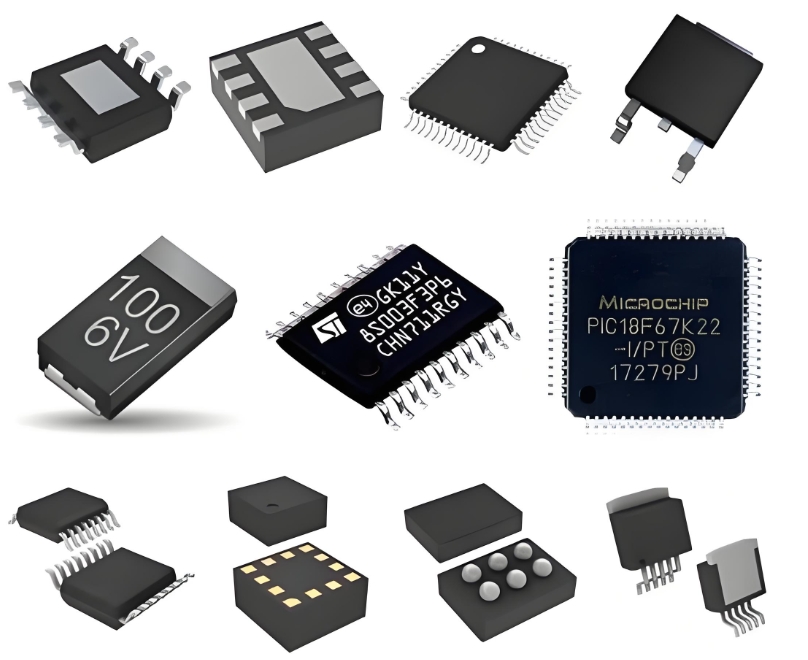
For precision control applications, the MCU is equipped with an 8-channel, 10-bit Analog-to-Digital Converter (ADC) and a 16-channel Timer/Pulse-Width Modulator (PWM) module. The PWM module is critical for controlling motors, LEDs, and power converters with high precision.
The S9S12XS256J0MALR is built with a focus on reliability and safety, crucial for its primary automotive market. It operates over an extensive temperature range and includes robust protection features such as a Computer Operating Properly (COP) watchdog timer, a phase-locked loop (PLL) clock monitor, and low-voltage detection circuits to ensure resilience against harsh electrical environments and power supply fluctuations.
Applications: Its combination of performance, integration, and resilience makes it ideal for a wide range of applications, including:
Automotive body control modules (BCM)
Instrument clusters and dashboard systems
Industrial automation and motor control systems
Advanced sensor modules and networking gateways
ICGOOODFIND: The NXP S9S12XS256J0MALR exemplifies the strength of the HCS12X family, offering a powerful blend of a mature 16-bit CPU core and the innovative XGATE co-processor. Its extensive memory, comprehensive peripheral set, and proven reliability in harsh environments make it a compelling choice for developers seeking a robust solution for complex real-time control systems, particularly within the automotive industry.
Keywords: HCS12X Microcontroller, XGATE Co-Processor, Automotive MCU, 16-bit Architecture, Embedded Flash Memory.

